
Most people never think about their bones until something goes wrong. A small fall that turns into a fracture. A back that suddenly feels stiff and sore for no clear reason. These moments often trace back to one thing, bone weakness building up quietly for years.
Bone might feel solid and permanent, but it is actually alive. Old bone is broken down and new bone is built in its place all the time. When that process slows down or gets out of balance, bones lose density and become fragile. This is what doctors call osteoporosis in its more advanced stage, but the causes of bone weakness often begin long before that diagnosis is made.
The World Health Organization reports that fractures are a growing global health problem. In 2019 alone, there were 178 million new fractures worldwide, a jump of over 33 percent since 1990. Research from the International Osteoporosis Foundation adds a striking number to this. About one in three women and one in five men over the age of 50 will break a bone at some point simply because their bones have grown weak. These are not small numbers, and they show why understanding the causes of bone weakness matters at any age, not just later in life.
This guide walks through why bones weaken, what symptoms of weak bones and muscles look like, how doctors check for it, and what actually helps.
What Causes Bone Weakness
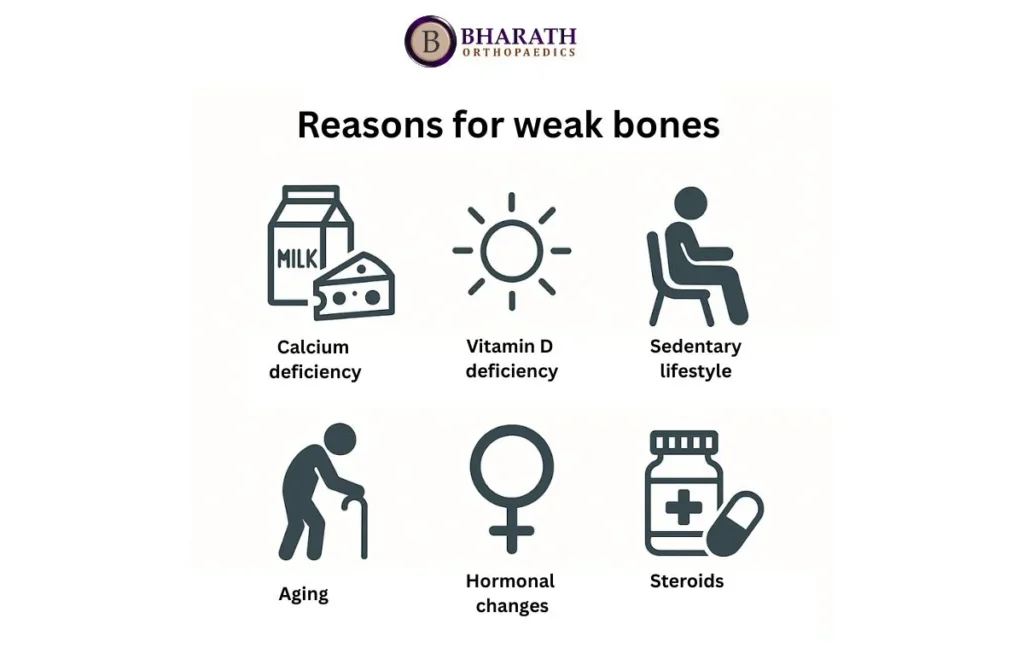
Getting Older
Bone naturally loses density with age. Past your thirties, the body starts removing old bone slightly faster than it rebuilds new bone. In women, this speeds up sharply after menopause because estrogen, a hormone that protects bone, drops. Men lose bone more slowly, but it still happens as testosterone declines with age.
Your Daily Habits
A surprising amount of bone health comes down to ordinary daily choices.
Not getting enough calcium and vitamin D is one of the biggest reasons bones weaken. Calcium builds the bone itself. Vitamin D is what lets your body actually absorb that calcium, so a shortage of either one quietly works against you.
Sitting for most of the day does not help either. Bone responds to pressure and impact. Walking, climbing stairs, and carrying weight all send a signal to your body to keep bone strong. Without that signal, density slips away over time.
Drinking heavily and smoking both work against your bones too. Alcohol interferes with how your body absorbs calcium, and smoking has been linked again and again to lower bone density and slower healing after fractures.
The good news here is that this entire category is within your control. Small changes to diet, movement, and habits genuinely change how your bones age.
Health Conditions that Affect Bone
Sometimes bone weakness is not about lifestyle at all. Certain health conditions interfere directly with how bone is built or maintained.
Osteoporosis itself is the most common cause of serious bone weakness, especially past age 50. Rheumatoid arthritis causes ongoing joint inflammation that can wear down nearby bone. An overactive parathyroid gland, a condition called hyperparathyroidism, pushes the body to release too much calcium from bone. And digestive conditions like celiac disease can quietly block calcium and vitamin D absorption even when your diet is otherwise fine.
If you have one of these conditions, it is worth asking your doctor specifically about your bone health, since the connection is not always obvious.
Ongoing Stress
This one surprises most people. When you are under stress for long stretches of time, your body keeps producing cortisol. In small doses cortisol is normal and useful. But when it stays high for months, it slows down new bone formation and speeds up bone loss at the same time. Poor sleep, which often comes with chronic stress, makes this worse.
Family History and Body Build
Some of this comes down to genetics. If a parent had osteoporosis, your own risk goes up. People with a smaller, thinner bone frame also tend to have less bone density to begin with, which leaves less room for loss before it becomes a problem.
Bone Health Changes at Every Age
Children and teens build most of their lifetime bone strength during growth years. Good calcium intake and active play now genuinely protect them decades later.
Adults in their twenties, thirties, and forties are usually at or near their peak bone strength, so this is the stage to build good habits that carry forward.
Older adults face the steepest decline, so this is when regular checkups, targeted exercise, and medication if needed matter the most.
Symptoms of Weak Bones and Muscles
Weak bones rarely announce themselves early. Most people find out after a fracture or a scan. Still, some signs are worth paying attention to.
Signs in the Bones
Breaking a bone from a fall that would not normally cause an injury Slowly losing height over the years Back pain that lingers, especially after standing or moving A slightly hunched or forward posture that develops gradually Feeling more limited in everyday movement than you used to
Signs in the Muscles
Weak bones and weak muscles often show up together.
Struggling to lift or carry things that used to feel easy Getting tired faster during normal activity Feeling unsteady or losing your balance more than before Trouble with stairs or inclines A general drop in stamina
If you notice several of these together, especially unexplained height loss or a fracture from a minor bump, it is worth getting checked rather than waiting it out.
How Doctors Diagnose Osteoporosis
A bone density scan, known as a DEXA scan, is the main test doctors use. It is quick, painless, and shows how your bone density compares to a healthy young adult.
Beyond the scan, your doctor will usually ask about your family history, diet, and activity levels, and check for signs like back pain or posture changes.
Blood tests often follow, checking your calcium, vitamin D, and thyroid levels, along with markers that show how actively your bone is breaking down or rebuilding.
Doctors also use a tool called FRAX, which estimates your personal risk of a fracture over the next ten years based on your test results and history. This helps decide how urgently treatment is needed.
If a fracture or spinal change is already suspected, an X-ray may be used to confirm it.
Protecting Bone Health in Women
Women lose bone faster than men in the years right after menopause, mainly because estrogen levels drop. A few habits make a real difference here.
Eating calcium rich foods regularly, like dairy, leafy greens, and fortified foods, gives your body steady building material for bone.
Weight bearing activity, even just brisk walking most days, helps slow the loss.
Getting fifteen to twenty minutes of sunlight most days supports your body’s natural vitamin D production.
Women over 40, or with a family history of osteoporosis, should ask their doctor about a bone density test rather than waiting for symptoms to show up.
When to See a Specialist
If you have broken a bone from a minor fall, noticed yourself getting shorter, or have risk factors like early menopause, a family history of osteoporosis, or long term steroid use, it is worth getting your bone health checked rather than waiting. Dr. Bharath Loganathan at Bharath Orthopaedics in Chennai offers bone health assessment and treatment planning for osteoporosis and related conditions.
You may also find our guide on Stress Fracture of the Shin useful, since reduced bone density is one of the reasons active people develop stress fractures.
If you are concerned about your bone strength or fracture risk, book an appointment for a bone density assessment.
Read also: Stress Fracture