

Medically reviewed by Dr. L. Bharath , Consultant Orthopaedic Surgeon, Bharath Orthopaedics
Knee replacement surgery is one of the most successful orthopaedic procedures available. But how well it goes depends not just on the surgery itself. It depends heavily on what happens during recovery.
Many patients who struggle with recovery tend to make similar mistakes: doing too little in the first few days, doing too much between weeks three and six, or stopping physiotherapy the moment they feel better. Understanding the recovery process in advance helps you avoid those mistakes and get the best possible outcome from your surgery.
This guide walks through recovery from knee replacement week by week, from the day of surgery through to full return to activity.
What Does Recovery from Knee Replacement Involve?
Recovery from knee replacement involves three things working together: pain management that keeps you comfortable enough to move, physiotherapy that progressively rebuilds strength and range of motion, and patience with the timeline. Most patients reach a good functional level by three months. The knee continues to feel more natural over the first year after surgery.
The SMART fast-track protocol used at Bharath Orthopaedics accelerates the early stages significantly. Most patients are walking within 4 to 5 hours of surgery and discharged by Day 2, well ahead of conventional recovery timelines.
Recovery Timeline: Week by Week
Day of Surgery
With the SMART protocol, recovery begins within hours of surgery, not the following day. Non-opioid pain management means patients are alert and comfortable rather than drowsy and nauseous. Most patients take their first steps with physiotherapy support 4 to 5 hours after surgery.
The goal on Day 1 is not distance. It is activating the leg muscles, preventing blood clots, and signalling to the body that movement is safe.
Days 2 to 7
Most patients at Bharath Orthopaedics are discharged home by Day 2. At home, the focus is on:
Walking short distances several times a day with whatever support is needed. Frequency matters more than distance at this stage.
Doing the exercises given by your physiotherapist. These typically include ankle pumps, heel slides, quad sets, and straight leg raises. They feel simple but they are doing important work in keeping circulation moving and preventing the joint from stiffening.
Elevating the leg above hip level when resting, and applying ice wrapped in a cloth for 15 to 20 minutes at a time to manage swelling.
Taking prescribed pain medication consistently rather than waiting until pain becomes severe. Staying ahead of pain makes it easier to do the exercises that drive recovery.
Weeks 2 to 4
This is where most patients start to feel more confident. Walking distance increases, the need for strong pain medication reduces, and range of motion in the knee begins to improve noticeably.
Physiotherapy sessions become more structured during this phase. Exercises progress from bed-based movements to standing exercises and walking on stairs. The goal by the end of week four is for many patients to begin walking short indoor distances with minimal or no support.
Watch for the temptation to do too much. A day of increased activity is often followed by increased swelling and pain the following morning. If that happens, it is a signal to dial back and progress more gradually. It is not a setback. It is feedback.
Wound care remains important during this phase. Keep the surgical site clean and dry. Watch for increasing redness, warmth, or any discharge from the wound and report it to your surgical team promptly.
Weeks 4 to 6
By six weeks, most patients are managing daily activities independently. Walking around the home and short distances outside is normal. Climbing stairs with a handrail is manageable. Many patients return to driving around this point, provided they can safely perform an emergency stop and are no longer taking sedating pain medication. This also depends on which leg was operated on and your surgeon’s specific guidance.
Physiotherapy continues with a focus on building quad strength, improving the knee’s bend angle, and introducing balance exercises. The quad muscle weakens significantly before surgery due to pain limiting activity. Rebuilding it fully takes months of consistent work.
Weeks 6 to 12
This phase is where patients often feel they have recovered and reduce their rehabilitation effort. This is a mistake. The most important strength-building work happens between weeks six and twelve.
Many patients plateau here if they stop physiotherapy. Those who continue see meaningful gains in strength, stability, and confidence in the knee well into month three.
Low-impact activities like cycling on a stationary bike and swimming are usually appropriate from around six to eight weeks and are excellent for building strength without loading the joint heavily.
Months 3 to 6
By three months, most patients have returned to normal daily life. The knee feels significantly better than before surgery, though it may still feel slightly swollen or not entirely natural during certain movements.
Return to light recreational activity, including gentle walking for exercise, swimming, and cycling, is typically appropriate from month three onward with your surgeon’s clearance.
Full strength and the natural feel of the knee continue to develop throughout this period. Many patients are surprised to notice the knee still improving at five and six months.
Months 6 to 12
For most patients, the knee feels entirely natural by six to twelve months. Subtle improvements in confidence, proprioception, and strength continue throughout this period.
High-impact activities such as running, court sports, and heavy lifting should be discussed with your surgeon before resuming. For most patients with knee replacement, low-impact activity for life is the recommendation to protect implant longevity.
The SMART Recovery Timeline at a Glance
| Phase | Milestone |
|---|---|
| 4 to 5 hours post-surgery | First steps with physiotherapy support |
| Day 2 | Discharged home |
| Day 10 | Many patients walking with minimal support |
| Weeks 4 to 6 | Independent daily activities, possible driving |
| 3 months | Return to normal daily life and light activity |
| 6 to 12 months | Full functional recovery |
Preparing Your Home Before Surgery
A small amount of preparation before the operation makes the first two weeks at home significantly easier.
Clear walking paths through the main rooms you will use. Remove rugs or low furniture that could cause a trip. Install a grab rail in the bathroom if possible, or arrange a shower chair for the first few weeks.
Keep essential items within easy reach. Avoid placing things you need regularly on high shelves or the floor.
Arrange for help from a family member or caregiver for the first two weeks, particularly for tasks that require bending, carrying, or climbing. This is not a sign of weakness. It is practical planning that protects the healing joint.
If you live alone, discuss this with your surgical team before the operation. Community support services may be available, and your team can help plan for a safe discharge.
Managing Pain and Swelling at Home
Some pain and swelling in the first weeks is completely normal and expected. It does not mean something has gone wrong.
Take pain medication consistently as prescribed, on a schedule rather than waiting for pain to spike. This keeps you comfortable enough to do the physiotherapy exercises that drive recovery.
Use ice wrapped in a cloth for 15 to 20 minutes after exercise sessions or whenever swelling increases. Elevate the leg with support under the calf and ankle, not under the knee itself. Placing a pillow directly under the knee holds it in a bent position and can cause the joint to stiffen in that position over time.
Swelling typically reduces progressively over the first three months but may fluctuate with activity levels throughout. This is normal.
Warning Signs to Report Promptly
Most discomfort during recovery is expected and manageable. The following signs need prompt medical attention and should not be monitored at home: Increasing redness, warmth, or discharge from the wound site. Persistent fever above 38 degrees Celsius.
Calf pain, tightness, or swelling, which can indicate deep vein thrombosis. Sudden breathlessness or chest pain, which may indicate a pulmonary embolism and requires emergency medical attention immediately. Sudden severe increase in knee pain not explained by activity.
A feeling that the knee has given way or is significantly less stable than it was. Call your surgical team rather than waiting for the next scheduled appointment if any of these occur. For breathlessness or chest pain, go directly to the emergency department or call emergency services.
Physiotherapy: The Most Important Part of Recovery
Surgery replaces the damaged joint. Physiotherapy determines how well you use it.
The quadriceps muscle, which is the large muscle at the front of the thigh, weakens significantly in the months before surgery because pain limits how much patients can do. Rebuilding it after surgery takes consistent effort over several months.
Patients who complete their full physiotherapy programme consistently, including the home exercises between sessions, achieve significantly better outcomes than those who do only the formal sessions.
At Bharath Orthopaedics, physiotherapy begins on the day of surgery and follows a structured progressive programme tailored to each patient’s stage of recovery.
Eating to Support Recovery
Nutrition supports healing in practical ways during knee replacement recovery.
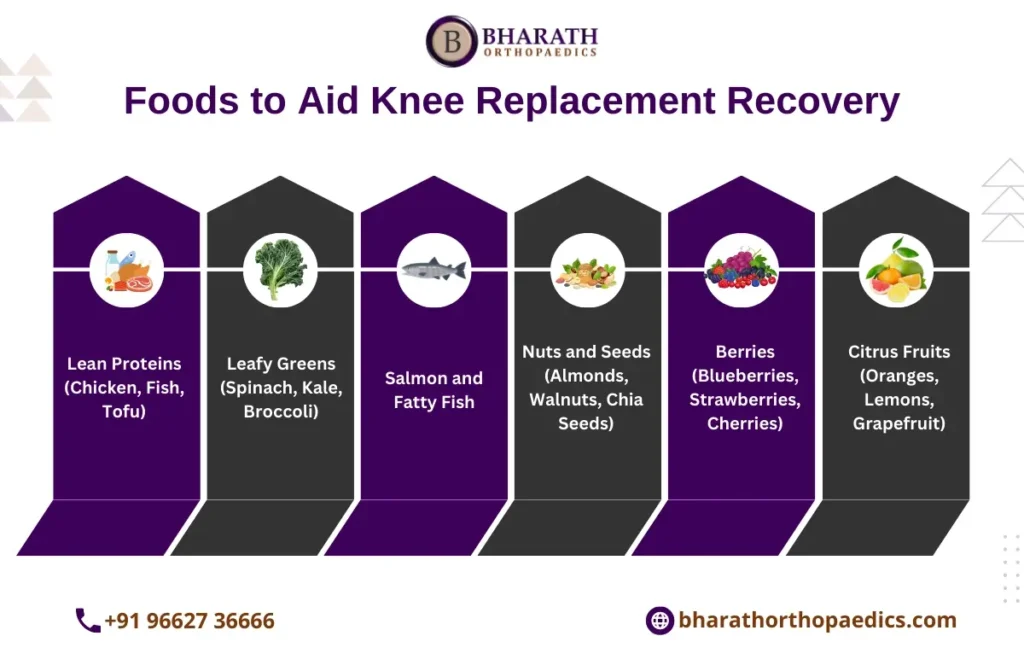
Protein is essential for tissue repair. Include good protein sources at each meal, including eggs, dairy, pulses, chicken, or fish. Inadequate protein slows healing and delays muscle rebuilding.
Calcium and vitamin D support bone health around the new implant. Dairy products, ragi, sesame seeds, and fortified foods are good sources. Vitamin D is also produced by the skin in sunlight, which is worth keeping in mind for patients who may be spending more time indoors during recovery.
Staying well hydrated keeps joint fluid healthy and supports overall circulation. It also reduces the risk of constipation, which is a common side effect of some pain medications.
For more on Indian food choices that support joint health, read our guide on Indian food for strong bones.

Questions to ask before You Leave Hospital
- Before discharge, make sure you have clear answers to these:
- What exercises should I be doing at home and how often?
- What are the signs of infection or blood clot I should watch for?
- When is my first follow-up appointment?
- When can I drive?
- When can I return to work and what does that depend on?
- What pain medication have I been prescribed and how should I take it?
Do not leave the hospital unclear on any of these. The answers shape the first two weeks of home recovery.
Next Steps
If you are preparing for knee replacement surgery or have recently had the procedure, the team at Bharath Orthopaedics is available to answer your questions at any stage of the process.
Read more about what the surgery involves on our Total Knee Replacement page, or learn about our SMART Knee Replacement approach and the fast-track recovery protocol. For common questions about the top mistakes patients make during recovery, see our guide on top 5 mistakes after knee replacement.
For appointments, visit our contact page.
Key Points
- Most patients plateau if they stop physiotherapy at six weeks. The most important strength building happens between weeks six and twelve
- Full recovery from knee replacement takes 3 to 6 months for most daily activities and up to a year for the knee to feel completely natural
- With the SMART fast-track protocol, patients are walking within 4 to 5 hours of surgery and discharged by Day 2
- Doing the physiotherapy exercises consistently at home, not just during formal sessions, is the most important factor in long-term outcome
- Never place a pillow directly under the knee when resting. Support the entire lower leg and ankle to prevent stiffness in a bent position
- Warning signs including fever above 38 degrees, calf swelling, and wound redness need prompt reporting, not home monitoring