

Medically reviewed by Dr. L. Bharath , Consultant Orthopaedic Surgeon, Bharath Orthopaedics
Osteoporosis is a condition in which bone density gradually decreases, making bones weak, brittle, and more likely to break. It is often called a “silent disease” because it usually causes no symptoms until a minor fall or knock leads to a fracture. According to the International Osteoporosis Foundation, around 1 in 3 women and 1 in 5 men over 50 worldwide may experience an osteoporotic fracture during their lifetime. The encouraging news is that with early diagnosis and the right care, bone loss can be slowed and fractures prevented. At Bharath Orthopaedics in Chennai, Dr. L. Bharath helps patients protect and rebuild bone strength through accurate diagnosis, medication, and lifestyle support.
What Is Osteoporosis?
The word “osteoporosis” means “porous bone.” In a healthy skeleton, the body constantly removes old bone and replaces it with new bone. With osteoporosis, this balance is lost: bone is broken down faster than it is rebuilt, so the bones become less dense and more fragile. Because the process is gradual and painless, osteoporosis often goes unnoticed until a fracture occurs, most commonly in the hip, wrist, or spine. Catching it early, before a fracture happens, improves the chances of maintaining bone strength.
Who Gets Osteoporosis?
Osteoporosis can affect anyone, but it is far more common in women, who are significantly more likely to develop it than men. This is largely because bone loss speeds up in the years after menopause, when the ovaries stop producing oestrogen, a hormone that helps protect bone. Men also lose bone with age, though usually later and more slowly. Other higher-risk groups include older adults, people with a family history of osteoporosis, those on long-term steroid medication, and people who are underweight or have a poor diet.
What are the Symptoms of Osteoporosis?
Osteoporosis usually has no symptoms in its early stages, which is why it is called a silent disease. Signs tend to appear only once bones have weakened significantly or a fracture has occurred. Watch for:
- Loss of height over time
- A stooped or hunched posture
- Sudden back pain, often from a spinal fracture
- Bones that break easily, from a minor fall or knock
- In advanced cases, difficulty breathing when spinal fractures reduce the space in the chest
If you notice any of these, especially after a minor injury, it is worth having your bone health checked.
What Causes Osteoporosis?
Osteoporosis develops when the body loses too much bone, makes too little, or both. Several factors raise the risk:
- Age — Bone naturally thins with age, as the body breaks down old bone faster than it builds new bone.
- Long-term steroid use — Steroid medicines reduce calcium absorption from the gut and increase calcium loss, weakening bone over time.
- Low oestrogen — Early menopause (before 45) or removal of the ovaries lowers oestrogen and speeds up bone loss in women.
- Lack of exercise — Without regular weight-bearing activity, bones lose density.
- Poor diet — Too little calcium or vitamin D, or being underweight, deprives bones of what they need to stay strong.
- Smoking — Tobacco lowers oestrogen in women and reduces testosterone activity in men, both of which weaken bone.
- Excess alcohol — Heavy drinking interferes with calcium absorption and increases the risk of falls and fractures.
- Family history — Osteoporosis can run in families, and rare genetic conditions such as osteogenesis imperfecta increase fracture risk.
How Is Osteoporosis Diagnosed?
Osteoporosis is usually diagnosed with a bone density scan called a DEXA (dual-energy X-ray absorptiometry) scan. It is a quick, painless test that measures bone mineral density, most often at the hip and spine.
Results are reported as a T-score:
- -1.0 or above — normal bone density
- Between -1.0 and -2.5 — low bone density (osteopenia)
- -2.5 or below — osteoporosis
Your doctor may also calculate a FRAX score, which estimates your 10-year risk of a major fracture based on your bone density, age, weight, and medical history. Blood tests are sometimes used to check calcium, vitamin D, and other factors that affect bone health. An early scan is the most reliable way to detect bone loss before it leads to a fracture — if you are over 50 or have risk factors, ask about a bone density test.
What are the Treatments for Osteoporosis?
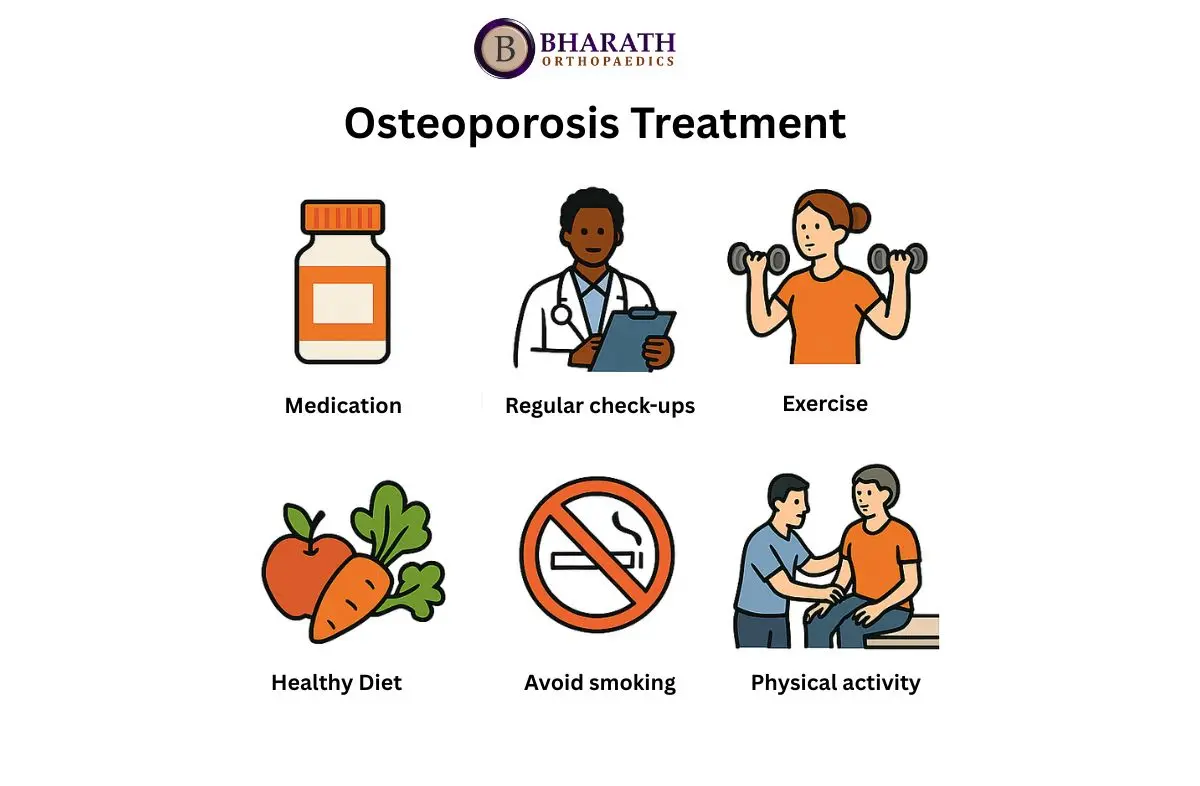
The goal of treatment is to slow bone loss, strengthen bone, and prevent fractures. Most plans combine medication with calcium, vitamin D, and lifestyle changes. The right choice depends on your bone density, age, fracture risk, and overall health.
Bisphosphonates are the most commonly prescribed medicines. Options include alendronate (Fosamax, Binosto), risedronate (Actonel, Atelvia), ibandronate (Boniva), and zoledronic acid (Reclast, Zometa). They are taken as weekly or monthly tablets, or as a once-yearly infusion. Oral forms should be taken on an empty stomach with water while staying upright, which reduces the risk of stomach irritation. Side effects are usually mild; rarely, long-term use may be associated with atypical thigh-bone fractures or osteonecrosis of the jaw, so treatment is often reviewed after 3 to 5 years.
Denosumab (Prolia) is given as an injection every six months and has been shown to improve bone density and reduce fracture risk. It is important not to stop denosumab suddenly without a follow-on medicine, as bone loss can rebound quickly.
Hormone-related therapy and SERMs such as raloxifene help maintain bone mass and can lower the risk of spinal fractures, with the added benefit of reducing breast cancer risk in postmenopausal women. They carry a small increased risk of blood clots, so suitability is assessed individually.
Bone-building (anabolic) medicines such as teriparatide (Forteo, Bonsity), abaloparatide (Tymlos), and romosozumab (Evenity) actively stimulate new bone formation. They are reserved for severe osteoporosis or when other treatments have not worked, and are usually given for a limited period (around 1 to 2 years) before switching to another medicine to maintain the gains.
Calcium and vitamin D form the foundation of every plan, helping the medicines work and supporting overall bone health.
Osteoporosis treatment works best as part of long-term management, with regular review and bone density monitoring to track progress.
Can Osteoporosis Be Reversed or Cured?
Osteoporosis cannot be completely cured, but it can be effectively managed. In some patients, treatment may improve bone density and reduce fracture risk. With the right medication, enough calcium and vitamin D, regular weight-bearing exercise, and bone density monitoring, bone loss can be slowed and bones kept stronger for longer. The earlier treatment begins, the better the outcome. It helps to think of osteoporosis as a long-term condition to manage, much like high blood pressure, rather than something to cure once and forget.
5 Ways to Prevent Osteoporosis
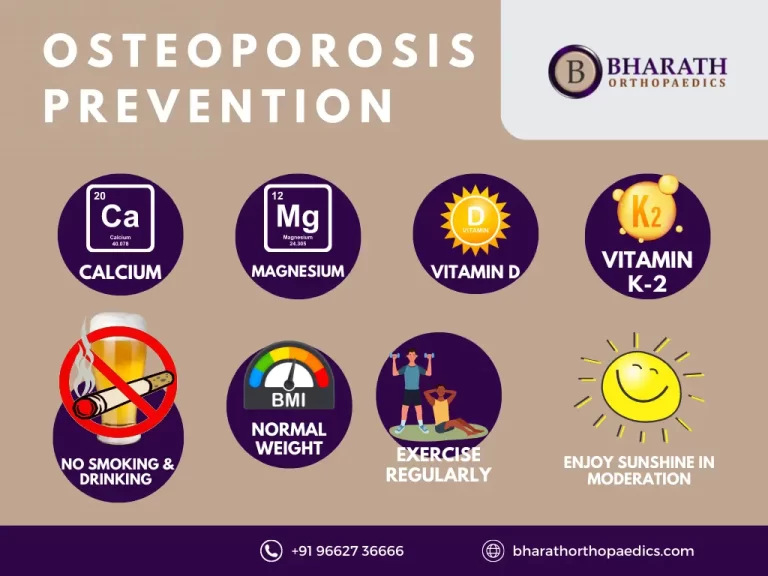
Healthy habits protect your bones for life. Five of the most effective ways to prevent osteoporosis are:
- Exercise regularly — Weight-bearing and strength exercises such as walking, jogging, and resistance training build and maintain bone density.
- Get enough calcium and vitamin D — Include calcium-rich foods such as milk, yoghurt, leafy greens, and ragi, and get vitamin D from sunlight or supplements.
- Quit smoking — Smoking speeds up bone loss and raises fracture risk.
- Limit alcohol — Excess alcohol interferes with calcium absorption and weakens bone.
- Monitor your bone health — Regular bone density tests catch bone loss early, when it is easiest to treat.
Treatment for Osteoporosis in the Spine
Osteoporosis often affects the spine, where weakened vertebrae can develop small compression fractures. This can cause back pain, loss of height, and a stooped posture. Treatment focuses on relieving pain, preventing further fractures, and protecting posture:
- Medications — Bisphosphonates, hormone therapy, and SERMs slow bone loss and strengthen the vertebrae.
- Physical therapy — Targeted exercises strengthen the muscles that support the spine and improve posture.
- Vertebroplasty or kyphoplasty — In selected patients, these minimally invasive procedures may help stabilise painful compression fractures.
- Surgery — In severe cases, spinal surgery may be needed to stabilise fractured vertebrae.
A specialist can recommend the safest option based on the severity of the fractures and your overall bone health.
When to See a Specialist
Early advice from a specialist can stop osteoporosis from progressing and lower your fracture risk. See a doctor if you have:
- Persistent back pain, especially after a fall, which can signal a spinal fracture
- Loss of height or a stooping posture, which may point to vertebral fractures
- Frequent fractures from minor falls or knocks
- A low bone density result on a DEXA scan
The sooner osteoporosis is diagnosed and treated, the more effectively your bones can be protected.
Osteoporosis Treatment at Bharath Orthopaedics, Chennai
At Bharath Orthopaedics, Dr. L. Bharath provides personalised osteoporosis care for patients across Chennai. With over 20 years of clinical experience, he focuses on accurate diagnosis, a clear explanation of your options, and a treatment plan suited to your bone density and lifestyle. From bone density assessment to medication and fracture prevention, you receive coordinated care at our Chennai clinics, with our main practice in Kilpauk. You can find clinic addresses and directions on our contact page.
If you are concerned about your bone health, or you have been told you have low bone density, book a consultation with Dr. L. Bharath today.
Conclusion
Osteoporosis is common, but it is also manageable. Early diagnosis with a bone density scan, the right medication, a calcium- and vitamin-D-rich diet, regular exercise, and ongoing monitoring can keep your bones strong and greatly reduce the risk of fractures. If you are over 50, postmenopausal, or have other risk factors, do not wait for a fracture — speak to a specialist and take the first step toward protecting your bone health.
Read also Best Arthritis Doctors in Chennai.