
In the heart of bustling cities like Chennai and Bangalore , traditional kitchen cabinets hold the secret to something often taken for granted: skeletal strength. While many focus heavily on skin or hair care, our bones—the very frame of our existence—often suffer in silence. Recent clinical observations suggest a worrying trend: people in India are now experiencing bone-related issues much earlier than previous generations.
The good news is that the solution isn’t always found in a medicine cabinet, but in traditional recipes. By choosing the right Indian food for strong bones, you can build a “bone bank” that serves you well into your senior years. This guide explores how to optimize your diet to ensure your mobility remains as vibrant as your lifestyle.
Why Are We Facing Weak Bones Earlier Than Before?
It is a medical irony that in a land of sunshine, nearly 80% of adults are Vitamin D deficient. If you are experiencing persistent aches, consulting a bone specialist in Chennai can help identify if these lifestyle factors are affecting your density:
- The Indoor Shift: The transition to desk-bound, air-conditioned office jobs means we rarely get the 15–20 minutes of midday sun required for natural Vitamin D synthesis.
- Refined Diets: The shift from traditional millets like Finger Millet and Pearl Millet to polished white rice has stripped daily meals of essential magnesium.
- High Salt Intake: Many popular savory snacks and pickles are high in sodium, which causes the body to lose calcium through urine.
- The Caffeine Culture: Excessive consumption of tea and coffee (more than 3 cups a day) can interfere with how the body absorbs calcium.
Top 12 Indian Foods for Strong Bones
Your kitchen is a powerhouse of mineralization. Here are the top contenders for Indian food for strong bones:
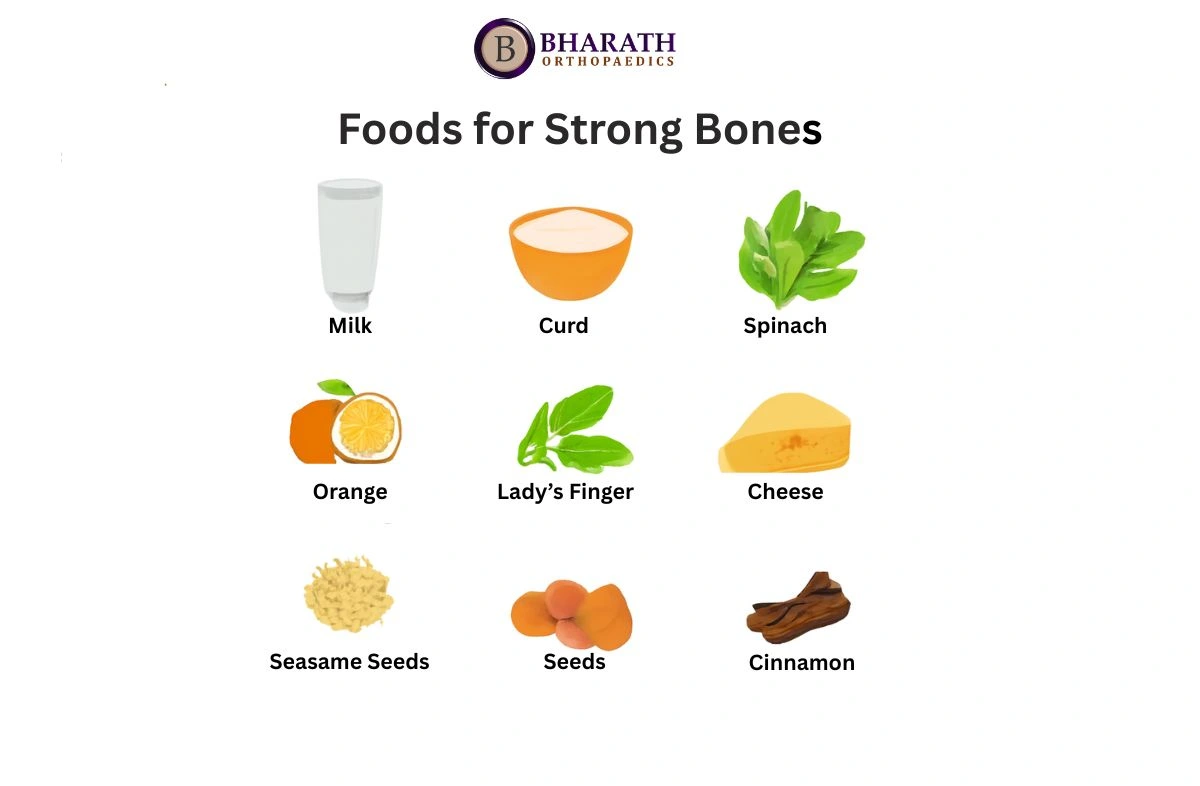
- Finger Millet (Ragi): The undisputed king of grains, containing nearly three times more calcium than milk.
- Cottage Cheese (Paneer): High in calcium and phosphorus, providing the building blocks for bone tissue.
- Yogurt: Packed with probiotics that help the gut absorb minerals more efficiently. It can fulfill nearly 20% of daily Vitamin D needs.
- Sesame Seeds: A tiny but mighty calcium food for knee pain and joint lubrication.
- Moringa (Drumsticks): Highly alkaline and rich in calcium; excellent for reducing bone inflammation.
- Almonds: Provides Vitamin E and magnesium, which helps “fix” calcium into the bone matrix.
- Spinach: Offers Vitamin K, essential for bone mineralization.
- Chickpeas: A great source of plant-based protein and manganese.
- Horse Gram: A traditional legume known for high mineral content.
- Oranges: Rich in Vitamin C, vital for collagen production—the “glue” that holds bones together.
- Soy Milk/Tofu: An excellent fortified option for those who are lactose intolerant.
- Amaranth: A naturally gluten-free grain that is exceptionally high in calcium.
Indian Food for Bone Fracture Healing
When a bone breaks, the body requires an “emergency supply” of nutrients to knit the tissue back together. Your diet plays a clinical role in each stage:
- Anti-Inflammatory Spices: Turmeric contains curcumin, which helps manage initial swelling. A warm glass of Turmeric Milk is a time-tested tradition for a reason.
- High-Quality Protein: The scaffold of a healing bone is made of collagen. Incorporating lentils, cottage cheese, or eggs ensures the body has the amino acids needed to build this new bridge. Eggs are particularly recommended for their Vitamin D content.
- Vitamin C Rich Foods: Guavas and citrus fruits are essential. Without Vitamin C, the body cannot produce the collagen matrix required for Indian food for bone fracture healing to be effective.
- Mineral-Rich Soups: Bone broth or drumstick soup provides a direct infusion of collagen and calcium that are easily absorbed during recovery.
Key Nutrients Needed for Strong Bones
Building bone is a team effort. You cannot rely on calcium alone.
- Calcium: The structural component of bones.
- Vitamin D: The “gatekeeper” that allows calcium to enter the bloodstream.
- Vitamin K2: The “traffic cop” that ensures calcium goes into the bones and not your arteries.
- Magnesium: Assists in converting Vitamin D into its active form.
Ragi vs Milk: Which is Better for Bone Strength?
This is a common debate in Indian households. Let’s look at the facts:
| Nutrient (per 100g) | Ragi (Finger Millet) | Milk (Cow) |
| Calcium | ~344 mg | ~120 mg |
| Fiber | High | None |
| Bioavailability | Moderate (Improved by sprouting) | High (Easily absorbed) |
The Verdict: You don’t have to choose! For the best Indian food for strong bones strategy, pair them together. A Ragi porridge made with milk is a “super-meal” that provides a high-density calcium food for knee pain relief.
Role of Non-Vegetarian Foods in Bone Strength
While many believe bone health is only about dairy, non-vegetarian sources offer unique benefits:
- Fatty Fish (Salmon, Rohu): These are excellent sources of Omega-3 fatty acids and Vitamin D, which are crucial for bone and heart health.
- Eggs: The yolk contains Vitamin D and K2, while the white provides high-quality protein.
- Small Fish with Bones: Traditional preparations where small fish are consumed with their bones provide a highly absorbable calcium boost.
Simple Indian Diet Plan for Strong Bones
Integrating Indian food for strong bones into your daily routine is simpler than it seems:
- Breakfast: Millet malt or amaranth porridge with soaked almonds.
- Mid-Morning: A bowl of fresh yogurt with a sprinkle of roasted sesame seeds.
- Lunch: Spinach lentils with a portion of pearl millet flatbread and drumstick curry.
- Evening: A handful of roasted chickpeas or a sesame seed ball.
- Dinner: Grilled cottage cheese or fish with sautéed broccoli and a whole wheat flatbread.
Foods to Avoid for Better Bone Health
Even the best Indian food for strong bones can be undermined by “bone-robbers”:
- Excessive Salt: Avoid heavy pickles and papads daily.
- Carbonated Drinks: Colas contain phosphoric acid, which can leach calcium from bones.
- Refined Sugar: High sugar intake increases the excretion of vital minerals.
Lifestyle Tips to Improve Bone Strength
- Weight-Bearing Exercise: Walking or yoga (Vrikshasana) tells your bones they need to stay strong.
- Sunlight Exposure: Aim for 15 minutes of sun between 11 AM and 1 PM for Vitamin D.
- Posture Awareness: Maintaining a straight spine prevents micro-stress on your vertebrae.
How Doctors Recommend Improving Bone Health
A leading Bone Specialist in Chennai will emphasize that bone health is a “long-term investment.” Professionals often suggest:
- Regular Screening: A DEXA scan is recommended for women post-menopause and men over 60.
- Early Intervention: Building “Peak Bone Mass” before age 30 is the best defense against osteoporosis.
- Supplements: If your blood tests show severe deficiency, diet alone may not be enough initially.
Common Questions About Indian Diet and Bone Health
Q: Can I get enough calcium if I am lactose intolerant? A: Absolutely. Focus on finger millet, sesame seeds, and dark leafy greens like amaranth. These are powerhouses of Indian food for strong bones that do not require dairy.
Q: Does tea or coffee really weaken bones? A: Not in moderation. However, if you drink more than four cups a day, the caffeine can slightly increase calcium loss. Try adding a splash of milk to your tea to offset this effect.
Conclusion
Investing in Indian food for strong bones is an investment in your future independence. By replacing refined grains with millets and staying mindful of Vitamin D, you ensure your “inner architecture” remains resilient. Remember, your bones are living tissue—they respond to the care and nourishment you provide them every single day. For personalized advice, consult an expert to find the best Indian food for strong bones for your specific needs.