
Living with rheumatoid arthritis (RA) can be physically and emotionally challenging. The pain, stiffness, and swelling can affect daily activities and overall quality of life. While RA does not have a permanent cure, early diagnosis and timely medical care can significantly slow disease progression and protect joint function. Seeking the right rheumatoid arthritis treatment in Chennai can help reduce inflammation, relieve symptoms, and prevent long-term joint damage.
This article offers a clear, patient-focused overview of current treatment options — from medications and lifestyle support to advanced surgical care when needed. Understanding your choices empowers you to make informed decisions in partnership with your doctor and begin a structured plan for long-term joint health.
What is Rheumatoid Arthritis?
Rheumatoid arthritis (RA) is a long-term autoimmune disease that mainly affects the joints. In this condition, the body’s immune system mistakenly attacks the lining of the joints, called the synovium. This causes pain, swelling, stiffness, and warmth around the affected joints.
Unlike regular “wear and tear” arthritis, rheumatoid arthritis is not just due to aging. It is an inflammatory condition that can affect multiple joints at the same time, often on both sides of the body — such as both hands, wrists, or knees. Over time, if not treated early, it can lead to joint damage and reduced movement.
RA can also affect other parts of the body, including the skin, eyes, lungs, and heart in some patients. With early diagnosis and proper medical care, symptoms can be controlled and long-term complications can be reduced.
What are the Stages of Rheumatoid Arthritis?
Understanding the stages of RA can help in seeking timely advanced rheumatoid arthritis treatment in Chennai:
- Early Stage:
- Joint inflammation causing mild swelling and pain.
- Presence of fatigue and stiffness, especially in the mornings.
- Moderate Stage:
- Visible joint damage seen in X-rays.
- Limited range of motion due to progressive inflammation.
- Severe Stage:
- Extensive cartilage damage leading to deformities.
- Increased pain, stiffness, and joint instability.
- End-Stage:
- Complete loss of joint function.
- Severe pain even during rest, often requiring surgical intervention.
Treatment Options for Rheumatoid Arthritis in Chennai
Rheumatoid arthritis requires long-term, structured care. The goal of treatment is to reduce inflammation, relieve pain, prevent joint damage, and maintain mobility. With early diagnosis and a personalized plan, many patients are able to lead active and comfortable lives.
If you are considering rheumatoid arthritis treatment in Chennai, it is important to understand the different options available.
Medication
Various Medications for Rheumatoid Arthritis
- Disease-Modifying Anti-Rheumatic Drugs (DMARDs): These are the first line of treatment for rheumatoid arthritis, designed to slow the disease’s progression.
- Biologic Agents: Target specific parts of the immune system to reduce inflammation and prevent joint damage.
- Nonsteroidal Anti-Inflammatory Drugs (NSAIDs): Help reduce pain and inflammation but do not prevent joint damage.
- Corticosteroids: Quickly reduce inflammation and pain but are usually prescribed for short-term use due to potential side effects.
Many patients ask about the best medicine for rheumatoid arthritis. The right medicine depends on the severity of the condition, overall health, and how the body responds to treatment. A rheumatologist will carefully select the most suitable medication plan for each individual.
Physical Therapy
Physiotherapy is essential for maintaining joint flexibility and muscle strength. Physiotherapists in Chennai offer personalized exercise programs and pain relief techniques such as heat and cold therapy, ultrasound, and TENS (Transcutaneous Electrical Nerve Stimulation).
Occupational Therapy
Occupational therapists help RA patients adapt their daily activities to their condition. They provide assistive devices and suggest ergonomic modifications to reduce stress on joints.
Surgery
When medications and therapy fail to prevent or slow joint damage, surgery may be necessary. Surgical options include:
- Synovectomy: Removal of the inflamed synovium.
- Tendon Repair: Repair of tendons that have been damaged or ruptured.
- Joint Fusion: Fusion of a joint to stabilize or realign it.
- Total Joint Replacement: Replacement of a damaged joint with a prosthesis
Causes of Rheumatoid Arthritis
The exact cause of rheumatoid arthritis (RA) remains unknown, but several factors contribute to its development. Understanding these causes is crucial for effective rheumatoid arthritis treatment in Chennai:
- Genetic Factors: A family history of RA increases the likelihood of developing the condition.
- Environmental Triggers: Exposure to certain infections or pollutants may trigger the onset of RA.
- Immune System Dysfunction: An overactive immune response mistakenly attacks healthy joint tissues.
- Hormonal Factors: Hormonal changes, particularly in women, can play a role in the development of RA.
Risk Factors
Several risk factors can increase the likelihood of developing rheumatoid arthritis.
- Age: RA can occur at any age but is more common in individuals aged 30-60.
- Gender: Women are significantly more likely to develop RA than men.
- Obesity: Higher body weight is linked to increased risk and severity of RA.
- Smoking: Tobacco use is associated with a higher risk of developing RA.
Signs and Symptoms of Rheumatoid Arthritis
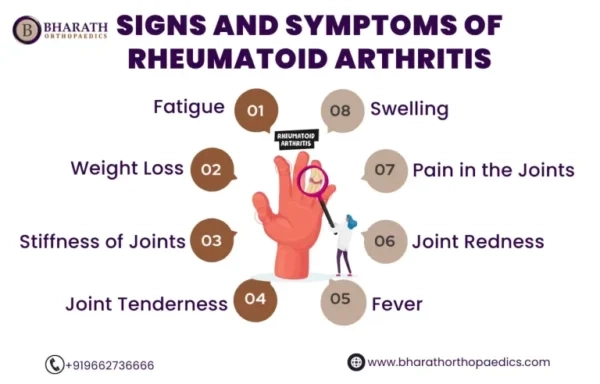
Rheumatoid arthritis often begins gradually. Many people first notice joint stiffness in the morning that lasts longer than 30 minutes. The joints may feel swollen, warm, and tender. Small joints of the hands, wrists, and feet are commonly affected.
One important pattern is symmetry. If one wrist or knee is painful, the same joint on the other side may also be involved. This can help doctors distinguish rheumatoid arthritis from other types of joint problems. Pain may come in episodes called flares, where symptoms temporarily worsen before settling down again.
Swelling is not just surface-level puffiness. It happens because the lining of the joint becomes inflamed. Over time, persistent inflammation can limit movement and make daily activities such as holding objects, climbing stairs, or even walking uncomfortable.
Rheumatoid arthritis can also cause symptoms beyond the joints. Some people feel ongoing fatigue, mild fever, or reduced appetite. This occurs because the immune system remains active and causes inflammation throughout the body.
Recognizing these signs early is important. Prompt medical care can slow joint damage and protect long-term mobility. In moderate to severe cases, doctors may recommend advanced rheumatoid arthritis treatment in Chennai, including targeted therapies that control inflammation more precisely and help patients regain better quality of life.
Diagnosis of Rheumatoid Arthritis
Diagnosing rheumatoid arthritis (RA) involves a thorough evaluation combining patient history, physical examination, and specific tests:
- Patient History: Doctors inquire about symptoms such as joint pain, stiffness, swelling, and fatigue. They also consider family history of RA or other autoimmune diseases.
- Physical Examination: Doctors examine joints for tenderness, swelling, warmth, and range of motion. They may check for nodules under the skin and assess overall joint health.
- Blood Tests: Tests for rheumatoid factor (RF) and anti-cyclic citrullinated peptide (anti-CCP) antibodies help confirm RA. Elevated levels indicate autoimmune activity.
- Imaging Tests: X-rays can reveal joint damage, erosion, and cartilage loss. MRI and ultrasound provide detailed images of inflamed joints and surrounding tissues, aiding in early detection.
- Other Tests: Synovial fluid analysis may be done to check for inflammation and rule out other conditions with similar symptoms
A comprehensive diagnostic approach helps doctors accurately diagnose RA, enabling timely initiation of treatment to manage symptoms and prevent joint damage.
What are the Complications of Rheumatoid Arthritis?
- Joint Deformity: Permanent structural changes in the joints.
- Cardiovascular Issues: Increased risk of heart diseases and strokes.
- Lung Involvement: Scarring and inflammation in lung tissues.
- Osteoporosis: Weak and brittle bones, increasing fracture risk.
- Skin Nodules: Lumps of tissue under the skin near joints.
- Infections: Weakened immunity due to the condition or medications.
- Vision Problems: Inflammation in the eyes causing dryness or vision loss.
Top Rheumatoid Arthritis Doctors in Chennai
Dr. L. Bharath
Dr. Bharath Loganathan is a highly respected and sought-after specialist for rheumatoid arthritis treatment in Chennai. With extensive experience in orthopedics and a focus on treating rheumatoid arthritis, Dr. Bharath is known for his patient-centric approach and expertise in advanced therapies. He offers comprehensive treatment plans that include the latest medications such as biologics and DMARDs, as well as personalized physiotherapy and lifestyle modifications to manage symptoms effectively.
Patients appreciate Dr. Bharath’s dedication to providing tailored care, ensuring that each treatment plan is customized to the individual’s specific needs. His commitment to staying updated with the latest advancements in rheumatoid arthritis treatment has earned him a reputation as one of the top rheumatoid arthritis doctors in Chennai.
- Years of Experience: Over 20+ years
- Qualifications: MBBS, MS (Orthopaedics), DNB (Orthopaedics)
- Available Time: Mon-Sat 9 am to 8 pm | Sun – 10 am to 3 pm
- Address: Flat-A Ground Floor, Balaji Villa,New Door No.38/1, Old Door No.9/1, Rajaratnam Street, Kilpauk, Chennai-600010

Types of Rheumatoid Arthritis
Rheumatoid arthritis is not the same for everyone. Doctors classify it into different types based on blood test results and how the disease behaves. Understanding the type helps guide treatment decisions.
1. Seropositive Rheumatoid Arthritis
This is the more common type. Blood tests show specific antibodies, such as rheumatoid factor (RF) or anti-CCP. People with this type may experience more persistent inflammation and a higher risk of joint damage if not treated early.
2. Seronegative Rheumatoid Arthritis
In this type, blood tests do not show the typical antibodies. However, joint pain, swelling, and stiffness are still present. Diagnosis is based on symptoms, physical examination, and imaging. Some individuals may have a milder disease course, but regular follow-up is still important.
3. Juvenile Idiopathic Arthritis (JIA)
When arthritis symptoms begin before the age of 16, it is classified as juvenile idiopathic arthritis. It requires specialized care because it can affect growth and development in children.
4. Psoriatic Arthritis
Psoriatic arthritis is an inflammatory joint condition seen in some people with psoriasis, a skin disorder that causes red, scaly patches. Joint pain, swelling, and stiffness are common. It may affect one side of the body or different joints unevenly. Some people notice swelling of entire fingers or toes and changes in their nails. Early medical care helps prevent joint damage and supports long-term joint function.
Each type requires a personalized treatment approach. With timely diagnosis and appropriate care, most patients can effectively manage symptoms and maintain daily activities.
Living With Rheumatoid Arthritis
Managing RA effectively requires a combination of advanced rheumatoid arthritis treatment and lifestyle modifications. Here’s how to live better with RA:
- Follow a Treatment Plan:
- Consult the top rheumatologists for rheumatoid arthritis in Chennai for tailored care.
- Explore medication, physical therapy, or surgical options.
- Adopt a Healthy Diet:
- Focus on anti-inflammatory foods like omega-3 fatty acids, fruits, and vegetables.
- Maintain a healthy weight to reduce joint stress.
- Stay Active:
- Engage in low-impact exercises such as swimming or yoga.
- Strengthen muscles to support your joints.
- Manage Stress:
- Practice mindfulness techniques like meditation.
- Seek support from friends, family, or RA communities.
- Regular Monitoring:
- Schedule check-ups to track disease progression.
- Adjust treatments as needed to prevent complications.
- Financial Planning:
- Evaluate the rheumatoid arthritis treatment cost in Chennai to make informed decisions about care.
Conclusion
Rheumatoid arthritis is a chronic condition, but with early diagnosis and proper care, it can be effectively managed. Timely treatment helps reduce pain, control inflammation, and prevent long-term joint damage. Under the guidance of experienced specialists like Dr. L. Bharath, patients receive structured, evidence-based care focused on long-term joint health.
Choosing rheumatoid arthritis treatment in Chennai means working closely with a doctor who understands your individual symptoms and treatment goals. With regular follow-up and a personalized care plan, many patients are able to stay active and maintain a good quality of life.
Read also Rheumatoid Arthritis Foods to Avoid.